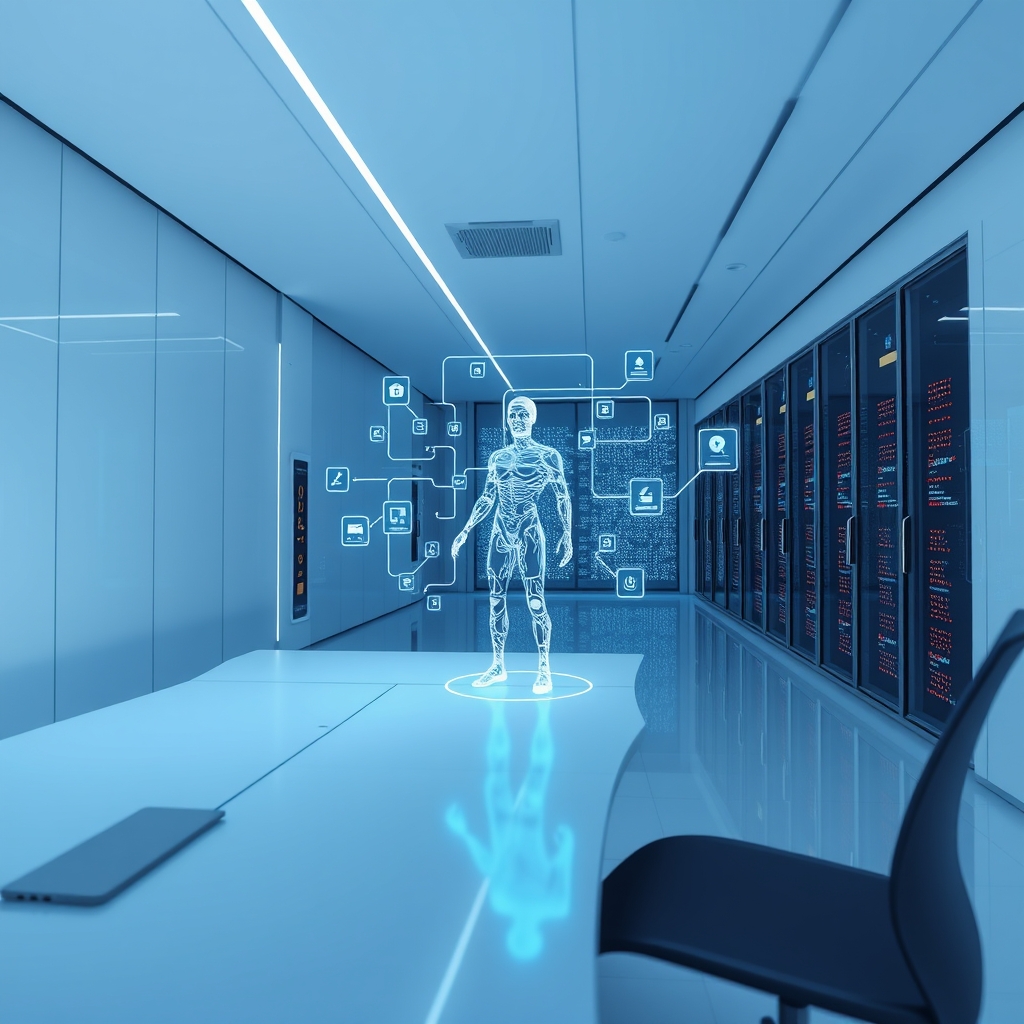
In the AI Agents era, Andrew Ng warns that simply mastering prompt engineering is no longer sufficient; the next frontier is constructing AI agents that can autonomously carry out and refine tasks.
AI Agents era Overview
Ng outlines a six-component roadmap for future AI systems:
- Agent – an AI entity that can execute concrete actions.
- Harness – the surrounding infrastructure that supplies tools, memory, and an execution environment for the agent.
- Feedback – mechanisms for gathering outcome data to assess performance.
- Loops – iterative cycles that repeat execution, check results, and correct errors.
- Graphs – connections that link multiple steps or multiple agents into complex workflows.
- Self-Improving Systems – architectures that use feedback to continuously boost efficiency.
Rather than merely receiving a question and generating a textual answer, AI is moving toward the ability to act, evaluate its own output, and improve over successive rounds. The loop-based approach and self-improving capabilities enable the system to detect mistakes, adjust its strategy, and deliver higher-quality results without human intervention.
During a recent lecture at Stanford, Andrew Ng broke down each of these concepts and offered practical advice on how AI engineers can start building real-world agent systems. He emphasized that the era demands more than prompt writing; engineers must design agents that can operate end-to-end and learn from their own performance.
For anyone interested in AI engineering or the emerging field of AI agents, the lecture is a highly recommended watch.
Conclusion
In the AI Agents era, the shift from prompt-only interactions to autonomous, self-improving agents marks a pivotal change in how we build and deploy intelligent systems.