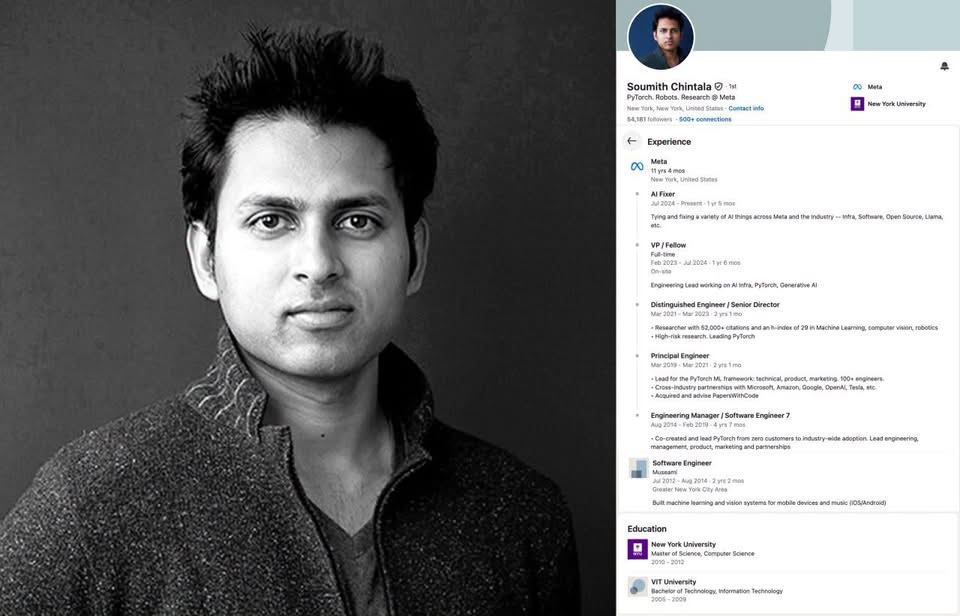
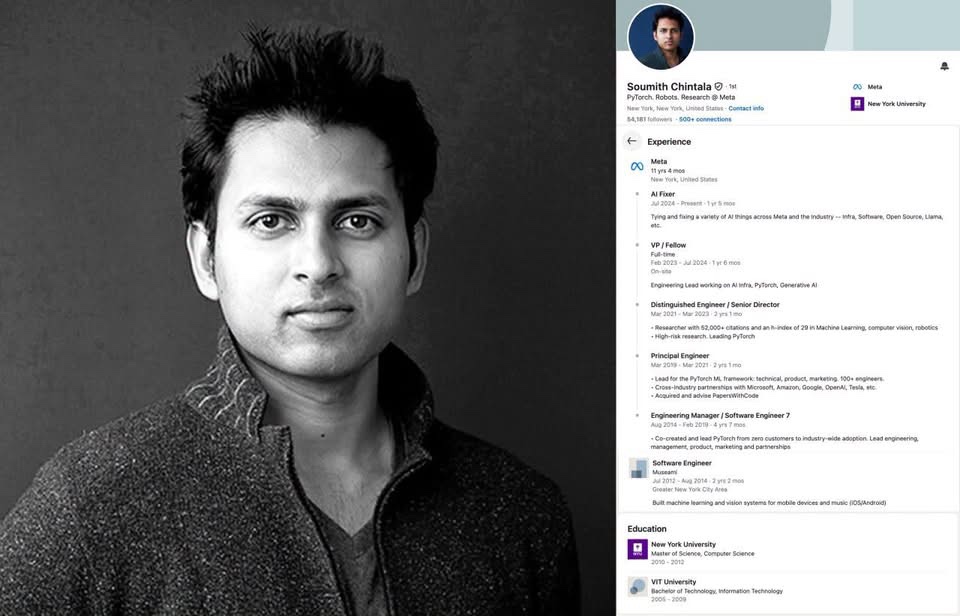
The journey to success is often paved with setbacks and rejections. For Soumith Chintala, the creator of PyTorch and former VP at Meta, this journey was no exception. Chintala's story is a testament to the power of perseverance and determination.
PyTorch 成功简介
PyTorch is one of the most popular deep learning frameworks in the world, used by researchers and developers alike. But before it became a household name, Chintala faced numerous challenges that could have derailed his career. From being rejected by 12 universities in the US to being turned down by DeepMind, Chintala's path to success was anything but smooth.
克服障碍
Chintala's story begins with his early days as a student in India. Despite attending a top-tier university, he struggled with mathematics, a subject that would later become the foundation of his career. Undeterred, he applied to universities in the US, only to be rejected by all 12 that he applied to. This setback did not discourage him, and he eventually made his way to the US on a J-1 visa. He then applied to 15 more universities, only to be rejected again by all but two – USC and NYU. It was during this time that he met Yann LeCun, a renowned figure in the field of AI, who would later become his mentor. Chintala's big break came when he started working on open-source projects, which eventually led to him being hired by Amazon as a test engineer. Although this was not his dream job, it marked the beginning of his journey in the tech industry.
PyTorch 的诞生
Chintala's experience working on open-source projects and his subsequent job at Amazon laid the foundation for the creation of PyTorch. In 2011-2012, he developed one of the fastest AI engines on mobile devices, which caught the attention of Yann LeCun. This led to him being hired by Facebook's AI research lab, FAIR, where he worked on the Torch7 project. It was during this time that Chintala, along with his team, developed PyTorch, which was initially met with resistance from Facebook's management. However, after a series of rejections and setbacks, PyTorch was finally released in 2017. The release of PyTorch marked a significant milestone in Chintala's career, and he eventually became the VP of Meta, one of the most influential people in the company.
实用要点
Chintala's story offers several practical takeaways for anyone looking to make a mark in the tech industry:
- Perseverance is key: Chintala's journey was marked by numerous setbacks, but he never gave up.
- 人际网络至关重要:他与 Yann LeCun 的会面是他职业生涯的转折点。
- Open-source projects can be a great way to get noticed: Chintala's work on open-source projects led to him being hired by Amazon.
- 相信自己至关重要:尽管面临无数次拒绝,钦塔拉从未对自己的能力失去信心。
PyTorch 成功案例如何运作
当读者可以将高级想法与底层工作流程联系起来时,PyTorch 成功故事就会变得更加清晰。强有力的解释应该显示从输入数据到有用输出的路径,包括如何表示、处理和评估信息。
对于技术读者来说,最有用的细节是影响质量的步骤:数据准备、模型架构、训练信号、推理行为和反馈循环。解释这些步骤可以使文章更加深入,而不会迫使初学者使用不必要的术语。
需要理解的关键组成部分
大多数现代人工智能系统都结合了几个层次:数据源、模型架构、训练基础设施、评估方法和部署控制。每一层都会影响生产中的准确性、延迟、成本和可靠性。
读者还应该了解提示、上下文窗口、检索系统、监控和人工审查的作用。这些组件通常决定系统是仅在演示中令人印象深刻,还是对于实际工作流程足够可靠。
限制和风险
任何技术概念都不应该被视为魔法。文章应解释该方法可能失败的地方,包括不准确的输出、过时的背景、有偏见的数据、隐私问题、不明确的评估和运营成本。
这些限制并不会使该技术无法使用,但它们确实决定了团队应如何应用它。良好的实施通常包括验证、日志记录、安全审查以及在决策重要时进行人工监督的计划。
如何有效利用该资源
关于 PyTorch 成功故事的有用文章应该帮助读者将简单的解释、技术机制以及他们下一步可能需要做出的实际决定联系起来。这意味着内容不应停留在定义上;它应该说明为什么这个主题很重要,它适合什么地方,以及读者如何负责任地评估它。
对于初学者来说,最重要的价值是清晰的心智模型。他们应该了解该技术解决的问题、它接收的输入类型、它产生的输出类型,以及原因结果可能因情况而异。
对于技术读者来说,本文应该指出架构、数据质量、评估和部署权衡。这些细节解释了为什么具有相似演示的两个系统在生产中的表现可能截然不同,特别是当数据专门化或工作流程具有严格的质量要求时。
对于商业读者来说,实际问题不在于该技术是否令人印象深刻。更好的问题是它是否可以减少摩擦、提高决策质量、支持团队流程或在不增加不可接受的运营风险的情况下创造更好的用户体验。
下一步最有力的步骤是将简短的可访问资源与更深层次的技术资源进行比较,然后写下每个资源澄清的内容。这种方法让读者既充满信心又保持谨慎,这通常是快速发展的技术主题的正确平衡。
读者还应该寻找展示成功案例和困难案例的例子。平衡的示例集使本文更有用,因为它揭示了干净的演示和真实操作环境之间的界限。
最后,每项建议都应该与实际决策联系起来。如果这篇文章无法帮助某人选择接下来要学习、测试、采用、避免或监控的内容,那么在发表之前可能需要更多背景信息。
读者应使用链接的源代码将摘要与原始实现细节进行比较,特别是当架构、工具或部署步骤影响最终决策时。
- 用通俗易懂的语言定义核心概念。
- 确定主要技术组件。
- 将想法映射到实际工作流程。
- 在建议采用之前检查限制。
- 使用参考文献来验证重要的声明。
源图像
结论
Soumith Chintala's PyTorch success story is a testament to the power of hard work, determination, and perseverance. His journey is an inspiration to anyone looking to make a mark in the tech industry. As we reflect on his story, we are reminded that success is not a destination but a journey, and it is the obstacles that we overcome that make the journey worthwhile. References: @@N8NLINK0@@