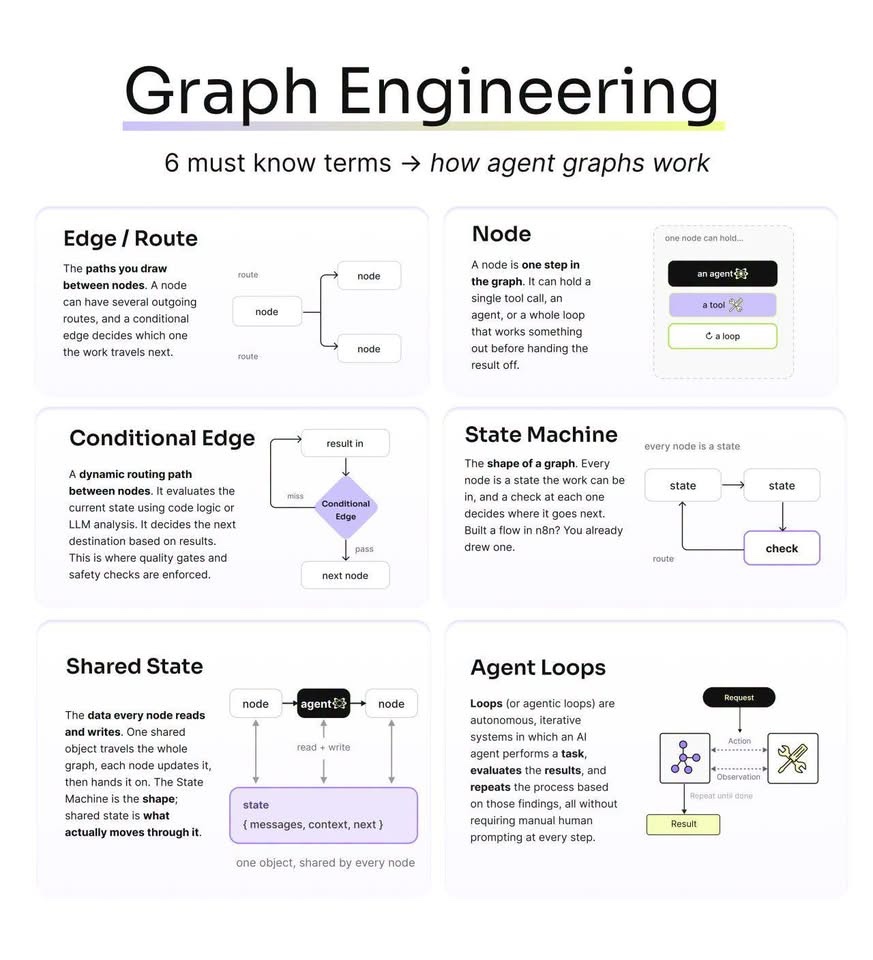
Graph Engineering is a concept that has been gaining attention lately. It allows for the organization of workflows in a clear and structured manner. Agent Loop, a component of Graph Engineering, enables AI to perform, check, and repeat tasks autonomously.
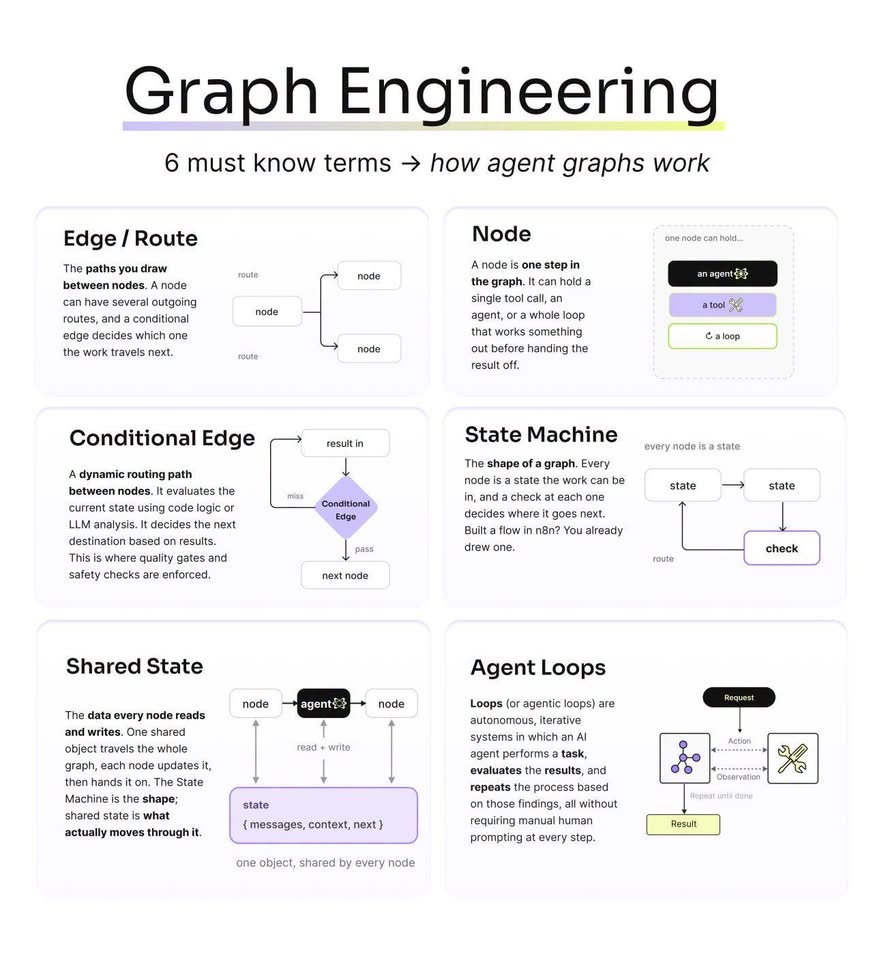
However, relying solely on loops can make the system difficult to control and predict. Graph Engineering addresses this issue by providing a framework with 6 key components: Node, Edge, Conditional Edge, State Machine, Shared State, and Agent Loop. The Node represents a processing step, which can be a tool, agent, or loop.
The Edge is the connection between these steps. The Conditional Edge determines the direction the system will take next. The State Machine encompasses the entire workflow structure and its various states.
The Shared State refers to the data that is transmitted and updated throughout each step. The Agent Loop is the AI component that acts, evaluates, and repeats until the task is completed. Loop does not disappear but becomes an integral part of the graph, providing autonomy to AI while allowing humans to maintain control.
References
These external sources were used to verify the article and provide deeper context.
Source Images
Conclusion
In conclusion, Graph Engineering is a crucial concept in organizing workflows, especially with the integration of AI. Its 6 components work together to provide a clear and structured approach to workflow management. For more information, visit the original article: @@N8NLINK0@@