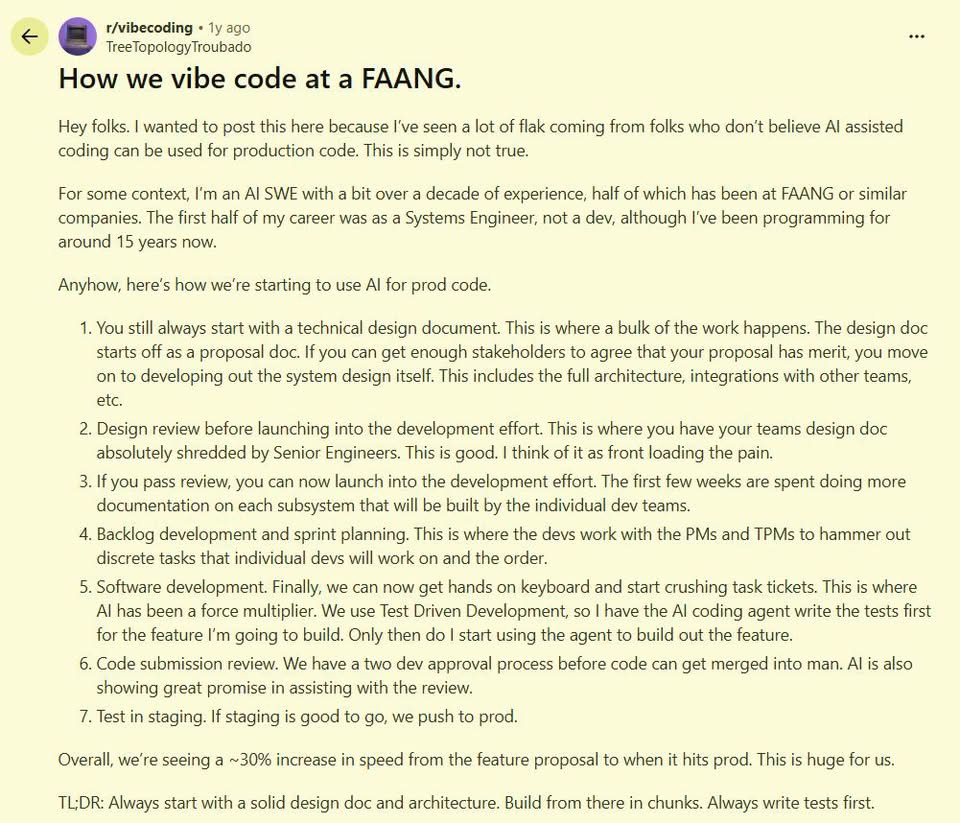
A seasoned software engineer, boasting over a decade of experience—half of which was spent at FAANG companies (Facebook, Amazon, Apple, Netflix, and Google) and similar-scale tech giants—recently shared insights on Reddit into the "code vibe" or development process they and their colleagues follow. This practical perspective offers a glimpse into the structured and often rigorous approach to software engineering at top-tier organizations, highlighting a clear FAANG code workflow that prioritizes robust design and leverages AI for efficiency.
The FAANG Code Workflow: A Step-by-Step Guide
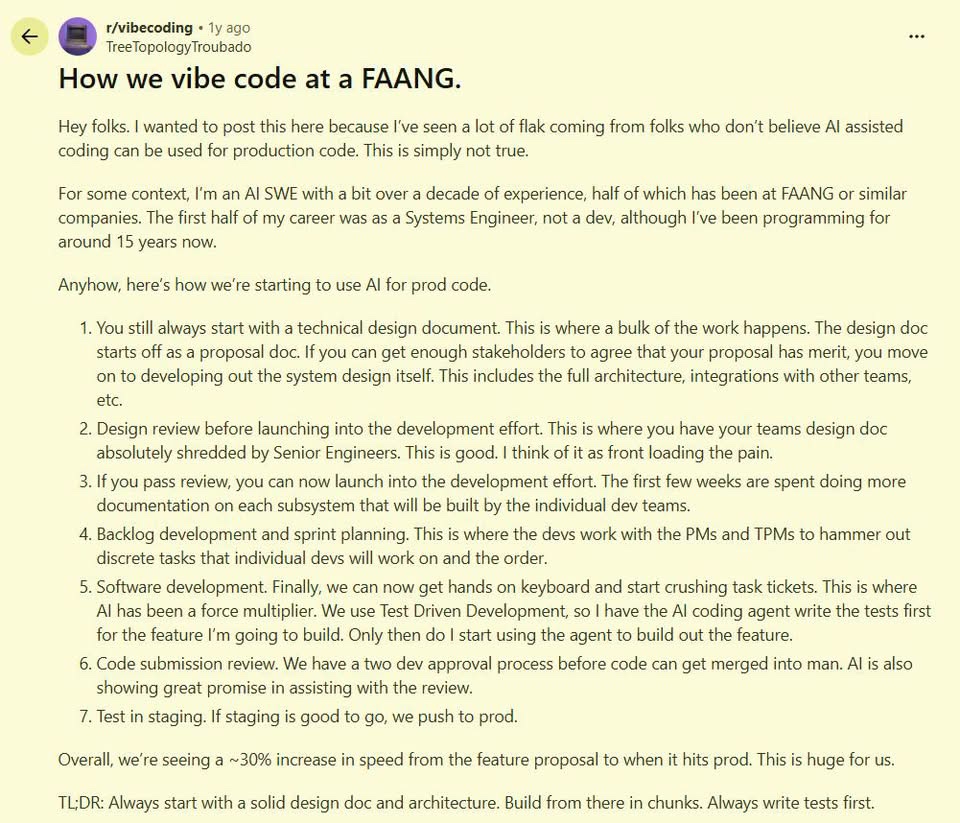
The engineer summarized their team's working process as follows, emphasizing a methodical approach from conception to deployment:
1. Design-First Imperative
The process always begins with a technical design document. The mantra is clear: "No design, no code." This foundational document must be explicit, detailing the architecture, integration points, and the fundamental rationale for the feature or system's existence. This early emphasis ensures clarity and alignment before any development work commences.
2. Rigorous Review and Planning
Once drafted, the design document undergoes intense scrutiny from senior engineers. This rigorous review from the outset is considered beneficial, as addressing issues early prevents more significant problems down the line. Only after the design successfully passes this review phase do developers begin coding. Following design approval, backlog refinement and sprint planning take place, with Product Managers and developers clearly defining and assigning tasks.
3. AI-Accelerated Coding with TDD
This is where AI significantly accelerates the development process. The team employs Test-Driven Desarrollo (TDD), but with a modern twist: AI writes the initial tests. Developers then utilize AI to build features that specifically pass these AI-generated tests. This integration of AI not only speeds up test creation but also guides feature development, ensuring adherence to requirements and quality standards from the comenzar.
4. Multi-Stage Code Review and Testing
Before any code is merged, it undergoes two rounds of code review. AI also plays a crucial role here, assisting in the examination and verification of the code, catching potential issues or suggesting improvements. Finally, the thoroughly reviewed code is deployed to a staging environment for comprehensive testing. Only once it passes all staging tests is it deemed ready for production deployment.
Source Images
Conclusion
This FAANG code workflow illustrates a highly structured and quality-driven approach to software development. By prioritizing detailed design, rigorous peer review, and strategically integrating AI for test generation and code review, these leading tech companies ensure robust, well-tested, and efficiently developed software solutions.