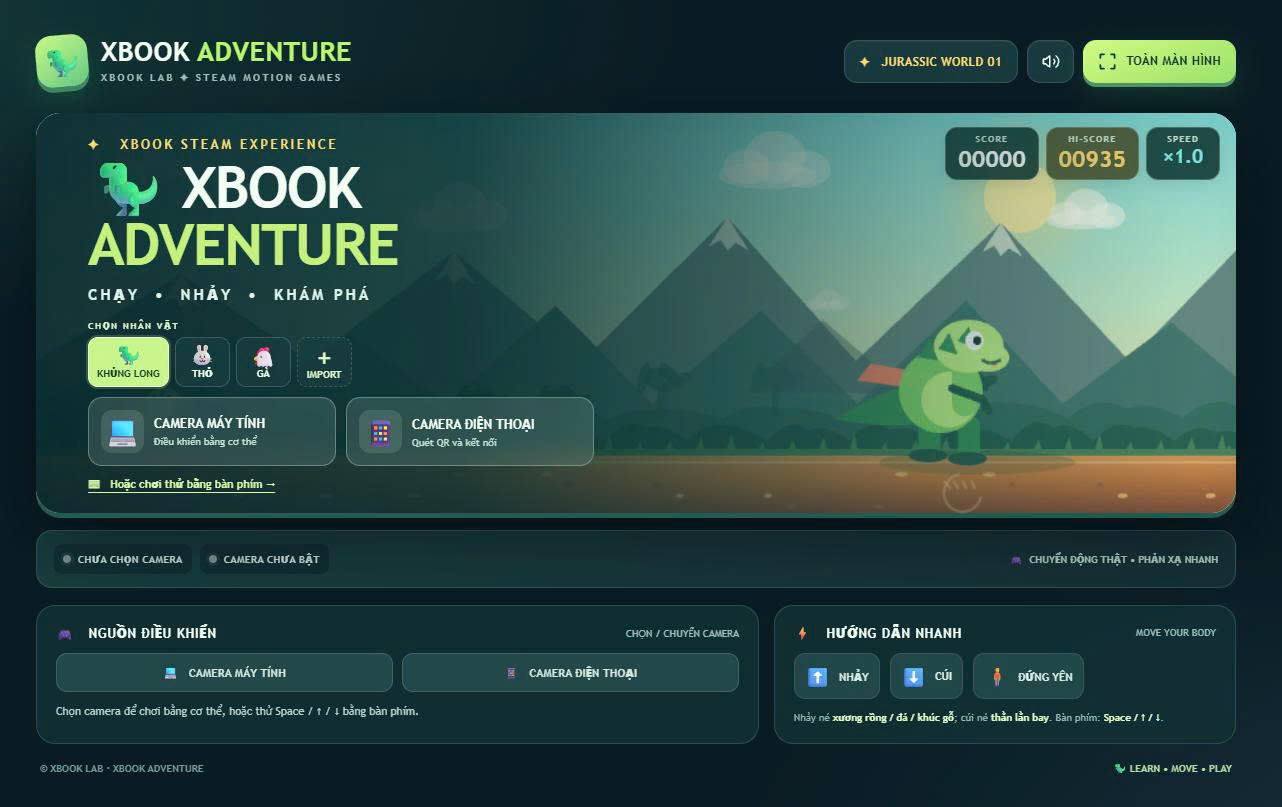
Vietnamese EdTech platform xBook combines AI, computer vision, interactive learning and physical activity while eliminating the need for expensive dedicated hardware.
As interactive education technologies continue to expand, one of the biggest barriers to adoption remains the cost of specialized equipment. Virtual reality headsets, motion sensors, infrared cameras and dedicated gaming systems can make advanced digital learning environments difficult to deploy, particularly in schools and communities with limited budgets.
xBook, an interactive education ecosystem developed by the Gen Z team at TUT Brand, aims to address that challenge with a different approach.
Instead of relying on expensive external devices, the platform uses existing cameras found in smartphones, tablets and laptops to create interactive learning experiences powered by artificial intelligence and computer vision.
The result is a learning environment where students do more than simply read or watch content. They can interact with digital lessons, manipulate 3D models and even use physical body movements to control educational activities.
From Digital Books to Interactive Learning Experiences
For years, many digital education products have focused primarily on converting traditional textbooks into PDFs, videos or other screen-based formats.
While this makes learning materials easier to distribute, the learning experience itself can remain largely passive.
xBook takes a different approach.
The platform’s Interactive Book Technology is designed to turn educational content into responsive digital experiences. Through AI-powered motion recognition and interactive content, learners can actively participate in lessons rather than simply consume information.
Students can interact with 3D learning models, explore visual content and use real-world movements to control elements displayed on a screen.
This approach reflects one of the core ideas behind the project: digital transformation in education should not simply digitize existing materials — it should create new ways for learners to engage with knowledge.
Combining Academic Learning With Physical Activity
One of xBook’s distinguishing features is its combination of academic learning and gamified physical activity.
The learning process is structured around three stages.
1. Micro-learning
Students first learn concepts through short and visual educational modules covering subjects such as mathematics, science and languages.
The goal is to present information in smaller, easier-to-understand learning units.
2. Gamified Physical Interaction
After completing the learning content, students move into an interactive activity mode.
Instead of answering questions using only a mouse or touchscreen, learners can perform physical movements such as jumping, squatting or reaching toward virtual objects displayed on the screen.
For example, a mathematics question may require students to physically move toward or touch the correct virtual answer.
This turns traditional exercises into activity-based educational games.
3. Combined Assessment
The platform can then evaluate multiple aspects of the learning session, including academic performance and physical activity.
The original xBook concept combines measurements such as answer accuracy with movement-related information such as physical activity and flexibility.
By connecting cognitive tasks with movement, the system is designed to create a more engaging learning experience while encouraging students to remain physically active.
AI and Computer Vision Remove the Need for Specialized Hardware
Many motion-based learning systems depend on additional hardware such as VR or AR headsets, infrared cameras or dedicated motion sensors.
xBook is designed to avoid that requirement.
Its computer vision system uses cameras that are already available on common consumer devices.
A smartphone, tablet or laptop camera can capture the user’s movements, while the software performs skeleton tracking to interpret body position and movement.
This allows learners to control interactive activities using their own bodies without requiring specialized motion-tracking equipment.
For schools and families, this model can significantly reduce the hardware investment normally associated with interactive learning technologies.
In practical terms, the “zero hardware cost” concept behind xBook refers to eliminating the need to purchase additional dedicated interaction devices when users already have access to a camera-equipped phone, tablet or computer.
Supporting Vietnam’s Digital Transformation Goals
The project is also positioned within Vietnam’s broader digital transformation strategy.
The original xBook initiative references Decision No. 749/QĐ-TTg on the National Digital Transformation Program and Decision No. 131/QĐ-TTg on strengthening the application of information technology and digital transformation in education.
By using widely available consumer devices instead of specialized hardware, xBook aims to make interactive digital education more accessible to a wider range of schools, teachers and learners.
For institutions operating with limited technology budgets, lowering the hardware requirements could make it easier to introduce interactive STEM and physical-learning activities into classrooms.
Making Interactive Education More Accessible
Removing specialized hardware requirements could create several practical applications for schools and communities.
Lower Infrastructure Costs for Schools
Schools and education centers do not necessarily need to build expensive virtual reality laboratories to introduce motion-based digital learning.
According to the xBook model, a classroom could operate interactive activities using existing displays together with smartphones or other camera-equipped devices.
This could allow teachers to organize STEM and physical-learning activities for groups of students while making better use of equipment already available.
Expanding Access in Underserved Communities
Hardware cost remains an important factor in technology accessibility.
By supporting lower-cost smartphones and computers, xBook is designed to make interactive learning available to families and students who may not have access to high-end educational equipment.
This approach is particularly relevant for rural and economically disadvantaged communities where infrastructure and education budgets may be limited.
Potential Applications for Older Adults
The platform’s movement-based activities can also be adapted to different audiences.
For older users, activities could be configured at a slower pace and combined with memory or cognitive exercises.
This creates potential opportunities for light physical activity combined with cognitive engagement at home or in community environments.
Gen Z Engineers Behind the Platform
Another notable element of the project is the team behind it.
xBook was developed by young Vietnamese technology professionals at TUT Brand, many of whom belong to Generation Z.
Having grown up alongside digital technology, the development team is approaching education not simply as a process of moving textbooks onto screens, but as an opportunity to rethink how people interact with educational content.
Their work combines software engineering, artificial intelligence, computer vision, gamification and interactive learning into a single education ecosystem.
Toward More Inclusive Digital Education
As education becomes increasingly digital, accessibility will remain as important as technological capability.
Advanced learning technology can create new opportunities, but those opportunities have limited social impact if they require equipment that many schools and families cannot afford.
xBook’s approach is based on a straightforward principle: use software and devices that people already own to make interactive learning more accessible.
By combining academic content, physical interaction, AI and computer vision while reducing dependence on specialized hardware, the platform represents a Gen Z-led attempt to build a more accessible model for digital education.
For Vietnam, projects such as xBook also demonstrate how young technology teams can contribute to the country’s broader digital transformation while addressing practical challenges in education.
As interactive learning continues to evolve, solutions that balance innovation, affordability and accessibility could play an increasingly important role in shaping the next generation of digital education.