Giới thiệu về Công cụ phân đoạn tài liệu
Khi xây dựng chatbot AI trên tài liệu nội bộ, một vấn đề thường gặp phát sinh: PDF, Word, PowerPoint, Excel hay hình ảnh scan không dễ dàng tích hợp vào RAG. Đây là lúc các công cụ phân đoạn tài liệu phát huy tác dụng, được thiết kế để thu hẹp khoảng cách giữa các tài liệu phi cấu trúc và dữ liệu có cấu trúc cần thiết để xử lý RAG hiệu quả.
Chunkr là gì?
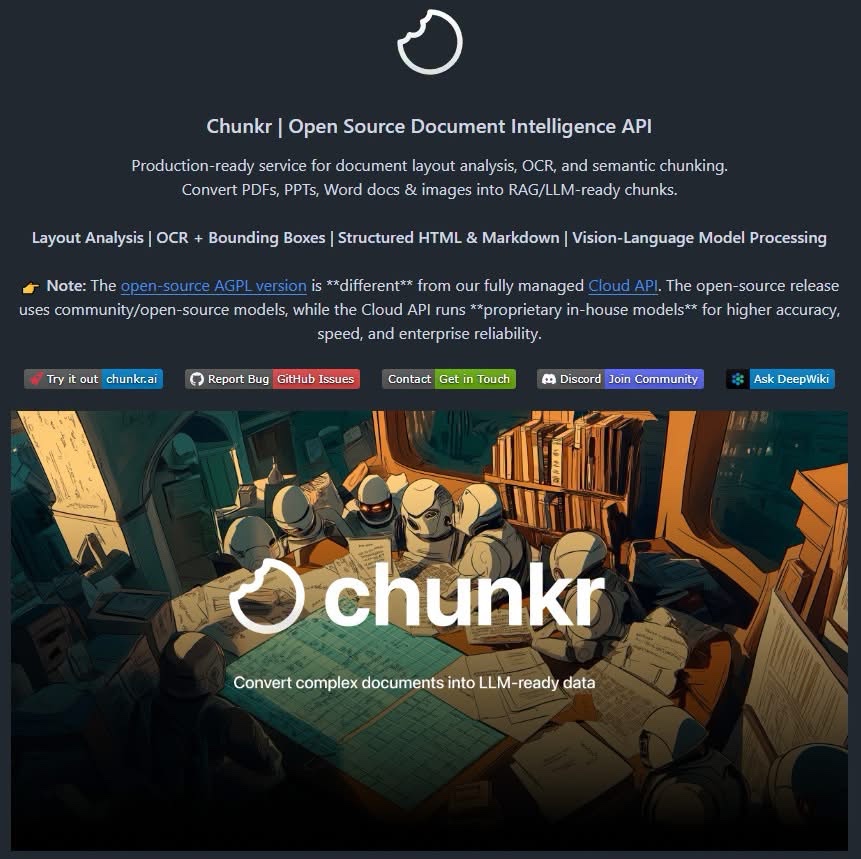
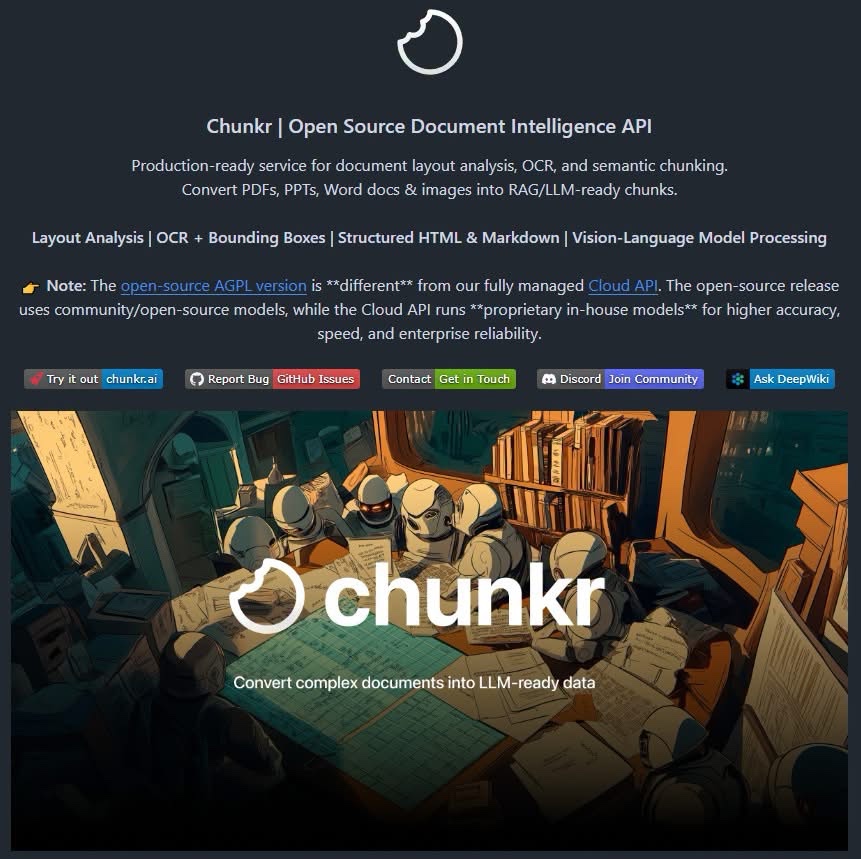
Chunkr là một công cụ được phát triển để giải quyết những thách thức trong việc xử lý các tài liệu phức tạp cho RAG. Nó cung cấp một loạt các chức năng, bao gồm:
- Analyzing document layouts
- OCR (Optical Character Recognition) for reading images or scanned files
- Extracting the position of each component
- Converting documents into structured Markdown or HTML
- Semantic chunking for vector databases and RAG
- Support for Vision Language Models for complex documents
Chunkr cũng hỗ trợ nhiều chương trình phụ trợ như OpenAI, OpenRouter, Google AI Studio, vLLM và Ollama.
Tầm quan trọng của việc xử lý tài liệu chất lượng
The quality of RAG is not solely dependent on the LLM (Large Language Model) or vector database used. The quality of the input document processing plays a significant role in determining the quality of the AI's responses. Therefore, tools like Chunkr are crucial in ensuring that the documents are properly structured and analyzed before being fed into the RAG system.
Các tính năng và lợi ích chính
Các tính năng chính của Chunkr bao gồm khả năng xử lý các định dạng tài liệu khác nhau, thực hiện OCR và cấu trúc dữ liệu được trích xuất theo định dạng phù hợp với RAG. Điều này không chỉ đơn giản hóa quy trình xử lý tài liệu mà còn nâng cao hiệu suất tổng thể của chatbot AI. Bằng cách sử dụng Chunkr, các nhà phát triển có thể tập trung vào việc tinh chỉnh các mô hình AI của họ thay vì tiêu tốn tài nguyên vào việc xử lý tài liệu thủ công.
Ứng dụng thực tế và bài học
Đối với những người muốn triển khai các công cụ phân chia tài liệu như Chunkr, đây là một số bài học thực tế:
- Simplify Complex Documents: Use Chunkr to analyze and structure complex documents, making them RAG-ready.
- Improve AI Response Quality: By ensuring high-quality input data, you can significantly improve the responses generated by your AI chatbot.
- Support for Multiple Backends: Chunkr's compatibility with various backends makes it a versatile tool for different project requirements.
Cách thức hoạt động của các công cụ phân đoạn tài liệu
Công cụ chia nhỏ tài liệu becomes clearer when readers can connect the high-level idea to the underlying workflow. A strong explanation should show the path from input data to useful output, including how information is represented, processed, and evaluated.
For technical readers, the most useful details are the steps that influence quality: data preparation, model architecture, training signals, inference behavior, and feedback loops. Explaining those steps gives the article more depth without forcing beginners into unnecessary jargon.
Các thành phần chính cần hiểu
Most modern AI systems combine several layers: data sources, model architecture, training infrastructure, evaluation methods, and deployment controls. Each layer affects accuracy, latency, cost, and reliability in production.
Readers should also understand the role of prompts, context windows, retrieval systems, monitoring, and human review. These components often decide whether a system is merely impressive in a demo or dependable enough for real workflows.
Hạn chế và rủi ro
No technical concept should be presented as magic. The article should explain where the approach can fail, including inaccurate outputs, outdated context, biased data, privacy concerns, unclear evaluation, and operational cost.
These limitations do not make the technology unusable, but they do shape how teams should apply it. Good implementation usually includes validation, logging, security review, and a plan for human oversight when decisions matter.
Cách sử dụng tài nguyên này một cách hiệu quả
A useful article about Công cụ chia nhỏ tài liệu should help readers connect the simple explanation, the technical mechanism, and the practical decision they may need to make next. That means the content should not stop at definitions; it should show why the topic matters, where it fits, and how readers can evaluate it responsibly.
For beginners, the most important value is a clear mental model. They should understand the problem the technology solves, the kind of input it receives, the kind of output it produces, and the reason results can vary from one situation to another.
For technical readers, the article should point toward architecture, data quality, evaluation, and deployment tradeoffs. These details explain why two systems with similar demos can behave very differently in production, especially when the data is specialized or the workflow has strict quality requirements.
For business readers, the practical question is not whether the technology is impressive. The better question is whether it can reduce friction, improve decision quality, support a team process, or create a better user experience without adding unacceptable operational risk.
The strongest next step is to compare a short accessible resource with a deeper technical resource, then write down what each one clarifies. That approach gives readers both confidence and caution, which is usually the Phải balance for fast-moving technology topics.
Readers should also look for examples that show both successful and difficult cases. A balanced example set makes the article more useful because it reveals the boundary between a clean demonstration and a real operating environment.
Finally, every recommendation should connect back to a practical decision. If the article cannot help someone choose what to learn, test, adopt, avoid, or monitor next, it probably needs more context before publication.
Readers should use the linked source to compare the summary against the original implementation details, especially when architecture, tooling, or deployment steps influence the final decision.
- Define the core concept in plain language.
- Identify the main technical components.
- Map the idea to real workflows.
- Check limitations before recommending adoption.
- Use references to verify important claims.
Tài liệu tham khảo
These external sources were used to verify the article and provide deeper context.
Nguồn hình ảnh
Phần kết luận
Document chunking tools like Chunkr are essential for simplifying the process of converting complex documents into structured data for RAG. By leveraging Chunkr's capabilities, developers can enhance the quality of their AI chatbots' responses, leading to more efficient and effective interactions. For more information on Chunkr, visit the @@N8NLINK0@@.