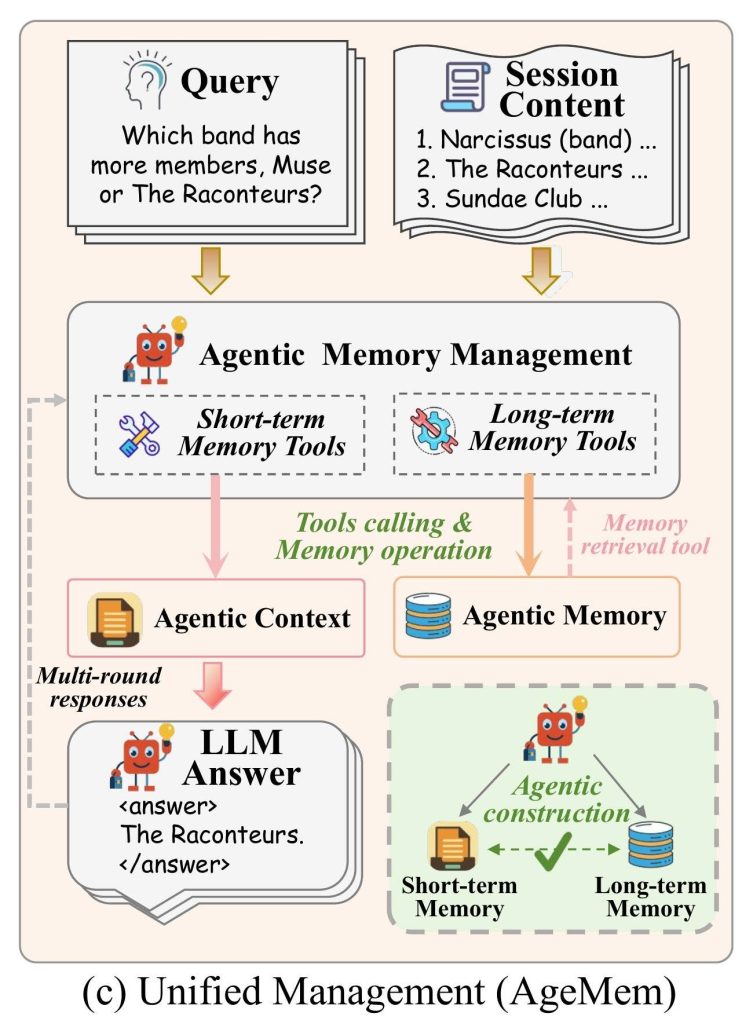

The development of AI Agents often faces a common issue: context overload. This occurs when the context window is filled too quickly, causing the model to struggle with making decisions. Context management solutions can help alleviate this problem by compressing output from various tools, logs, files, and RAG chunks before they enter the model.
Introduction to Context Overload
Context overload is a prevalent problem in AI Agent development. It happens when the model is flooded with too much information, making it difficult for the model to process and make decisions. This can be caused by various factors, including tools returning excessive content, browsers reading entire pages, test runners generating thousands of lines of log, and RAG sending multiple chunks of metadata.
Context Management Solutions
Context management solutions, such as Headroom, can help mitigate this issue. Headroom is a library, proxy, or MCP server that compresses output from tools, logs, files, and RAG chunks before they enter the model. This approach has several benefits, including:
- Reducing noise in the context window
- Preserving important information for the model to process
- Avoiding deletion of original data
- Allowing for retrieval of full context when needed
Key Features of Context Management Solutions
Some key features of context management solutions include:
- Compression of noisy content before building prompts
- Preservation of crucial information for model processing
- Non-deletion of original data
- Ability to retrieve full context when required
Importance of Context Management
With AI Agent systems, context management can be just as crucial as model selection. Effective context management enables models to focus on relevant information, leading to better decision-making and improved performance.
Best Practices for Implementing Context Management Solutions
When implementing context management solutions, consider the following best practices:
- Identify the sources of context overload
- Evaluate the trade-offs between compression and preservation of information
- Monitor the impact of context management on model performance
How Context Management Solutions Works
Context Management Solutions becomes clearer when readers can connect the high-level idea to the underlying workflow. A strong explanation should show the path from input data to useful output, including how information is represented, processed, and evaluated.
For technical readers, the most useful details are the steps that influence quality: data preparation, model architecture, training signals, inference behavior, and feedback loops. Explaining those steps gives the article more depth without forcing beginners into unnecessary jargon.
Key Components to Understand
Most modern AI systems combine several layers: data sources, model architecture, training infrastructure, evaluation methods, and deployment controls. Each layer affects accuracy, latency, cost, and reliability in production.
Readers should also understand the role of prompts, context windows, retrieval systems, monitoring, and human review. These components often decide whether a system is merely impressive in a demo or dependable enough for real workflows.
Limitations and Risks
No technical concept should be presented as magic. The article should explain where the approach can fail, including inaccurate outputs, outdated context, biased data, privacy concerns, unclear evaluation, and operational cost.
These limitations do not make the technology unusable, but they do shape how teams should apply it. Good implementation usually includes validation, logging, security review, and a plan for human oversight when decisions matter.
Practical Takeaways
- Start with the core concept before moving into architecture or implementation.
- Connect each technical detail to a practical use case or decision.
- Call out limitations clearly so readers know how to apply the idea responsibly.
How to Use This Resource Effectively
A useful article about Context Management Solutions should help readers connect the simple explanation, the technical mechanism, and the practical decision they may need to make next. That means the content should not stop at definitions; it should show why the topic matters, where it fits, and how readers can evaluate it responsibly.
For beginners, the most important value is a clear mental model. They should understand the problem the technology solves, the kind of input it receives, the kind of output it produces, and the reason results can vary from one situation to another.
For technical readers, the article should point toward architecture, data quality, evaluation, and deployment tradeoffs. These details explain why two systems with similar demos can behave very differently in production, especially when the data is specialized or the workflow has strict quality requirements.
For business readers, the practical question is not whether the technology is impressive. The better question is whether it can reduce friction, improve decision quality, support a team process, or create a better user experience without adding unacceptable operational risk.
The strongest next step is to compare a short accessible resource with a deeper technical resource, then write down what each one clarifies. That approach gives readers both confidence and caution, which is usually the right balance for fast-moving technology topics.
Readers should also look for examples that show both successful and difficult cases. A balanced example set makes the article more useful because it reveals the boundary between a clean demonstration and a real operating environment.
Finally, every recommendation should connect back to a practical decision. If the article cannot help someone choose what to learn, test, adopt, avoid, or monitor next, it probably needs more context before publication.
Readers should use the linked source to compare the summary against the original implementation details, especially when architecture, tooling, or deployment steps influence the final decision.
- Define the core concept in plain language.
- Identify the main technical components.
- Map the idea to real workflows.
- Check limitations before recommending adoption.
- Use references to verify important claims.
References
These external sources were used to verify the article and provide deeper context.
Source Images

Conclusion
In conclusion, context management solutions are essential for improving the performance of AI Agents. By reducing context overload and preserving important information, context management solutions can help models make better decisions and improve overall system performance. With the right context management solutions, such as Headroom, AI Agent systems can achieve better outcomes and reach their full potential.