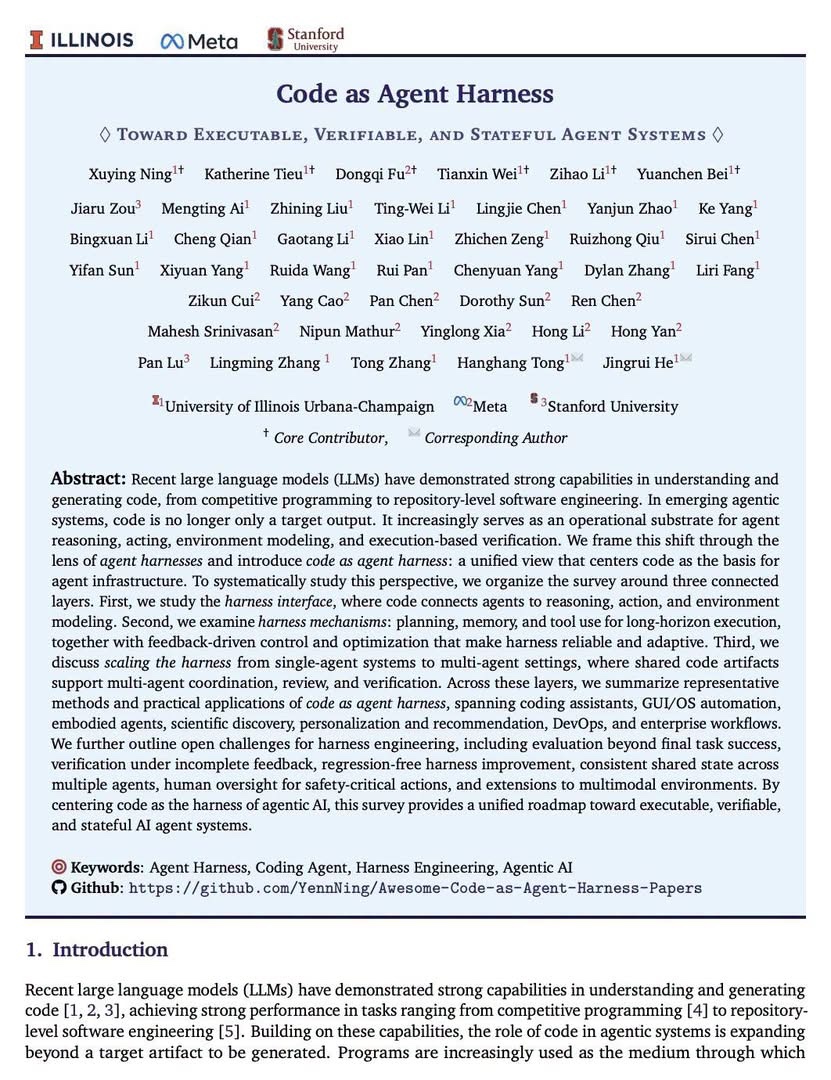
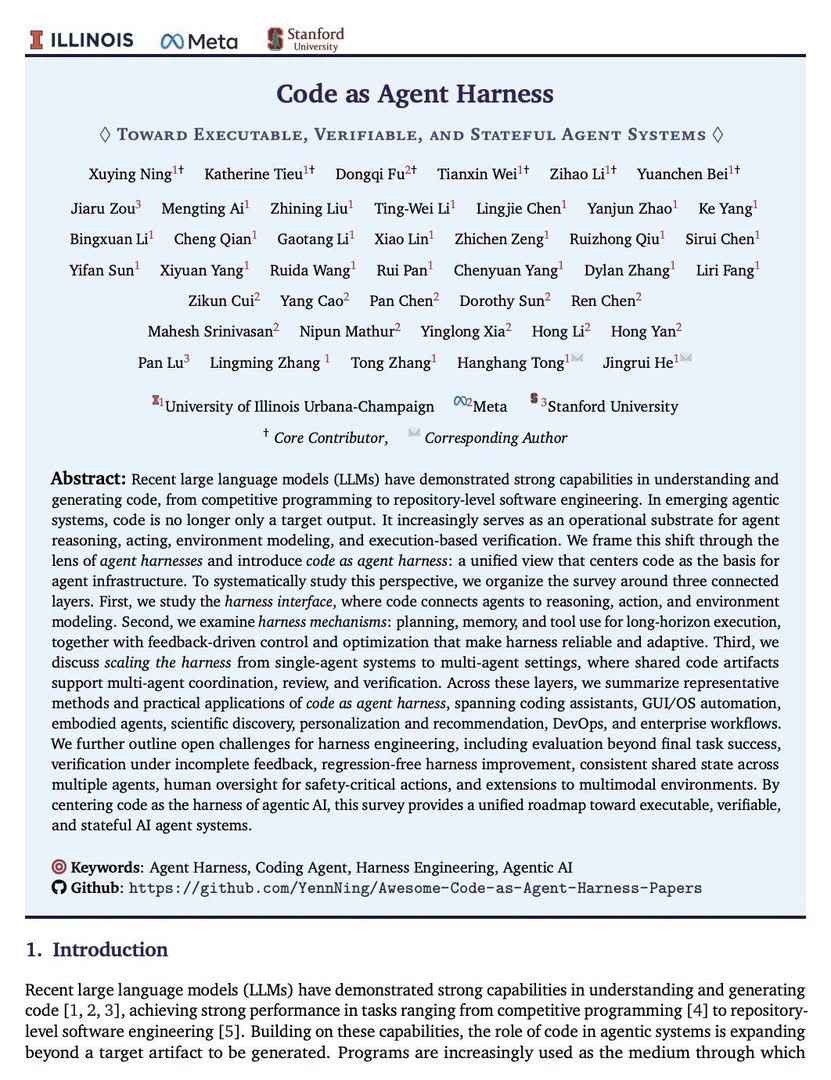
The concept of Code as Agent Harness, introduced by Stanford and Meta, represents a significant shift in how AI agents are developed. Traditionally, AI agents have relied on natural language processing to reason and make decisions. However, this approach has its limitations, as natural language can be ambiguous and prone to errors. In contrast, Code as Agent Harness requires AI agents to reason through code, providing a more reliable and efficient approach to AI development.
Mã khai thác đại lý là gì?
Code as Agent Harness là một khuôn khổ cho phép các tác nhân AI suy luận thông qua mã, thay vì ngôn ngữ tự nhiên. Cách tiếp cận này có một số ưu điểm, bao gồm khả năng chạy mã, biên dịch mã, kiểm tra mã và ghi lại lỗi. Bằng cách sử dụng mã làm phương tiện suy luận chính, tác nhân AI có thể tránh được sự mơ hồ và lỗi liên quan đến ngôn ngữ tự nhiên.
Lợi ích của Mã khi khai thác đại lý
Lợi ích của Code as Agent Harness là rất nhiều. Đầu tiên, mã có thể được chạy và kiểm tra, cung cấp thước đo rõ ràng và khách quan về tính hiệu quả của nó. Ngoài ra, trình biên dịch có thể báo cáo lỗi và nhật ký có thể cung cấp thông tin chi tiết có giá trị về nơi xảy ra lỗi. Môi trường hộp cát cũng có thể được sử dụng để hạn chế hành động của các tác nhân AI, ngăn chặn chúng gây hại hoặc thiệt hại.
Cách thức hoạt động của Mã khai thác tác nhân
Code as Agent Harness hoạt động bằng cách cung cấp một môi trường có cấu trúc để các tác nhân AI suy luận và đưa ra quyết định. Môi trường này bao gồm một số thành phần, bao gồm:
- Đề xuất mô hình: Tác nhân AI đề xuất giải pháp hoặc hành động.
- Thực hiện khai thác: Giải pháp đề xuất được thực hiện và thử nghiệm.
- Môi trường phản hồi: Kết quả thực thi được phản hồi lại cho tác nhân AI, cung cấp cho nó những hiểu biết và thông tin có giá trị.
- Người xác minh: Các kết quả được xác minh và xác nhận, đảm bảo đáp ứng các tiêu chuẩn và tiêu chí được yêu cầu.
Ý nghĩa của mã với tư cách là khai thác tác nhân
Ý nghĩa của Mã với tư cách là Khai thác tác nhân là rất đáng kể. Bằng cách cung cấp một cách tiếp cận đáng tin cậy và hiệu quả hơn để phát triển AI, Code as Agent Harness có tiềm năng cách mạng hóa lĩnh vực trí tuệ nhân tạo. Các tác nhân AI có thể được phát triển chính xác, đáng tin cậy và hiệu quả hơn, dẫn đến những đột phá trong các lĩnh vực như robot, xử lý ngôn ngữ tự nhiên và thị giác máy tính.
Các thành phần chính cần hiểu
Hầu hết các hệ thống AI hiện đại đều kết hợp nhiều lớp: nguồn dữ liệu, kiến trúc mô hình, cơ sở hạ tầng đào tạo, phương pháp đánh giá và kiểm soát triển khai. Mỗi lớp ảnh hưởng đến độ chính xác, độ trễ, chi phí và độ tin cậy trong sản xuất.
Người đọc cũng nên hiểu vai trò của lời nhắc, cửa sổ ngữ cảnh, hệ thống truy xuất, giám sát và đánh giá của con người. Các thành phần này thường quyết định liệu hệ thống chỉ ấn tượng trong bản demo hay đủ tin cậy cho quy trình làm việc thực tế.
Hạn chế và rủi ro
Không có khái niệm kỹ thuật nào được coi là ma thuật. Bài viết nên giải thích những điểm mà phương pháp tiếp cận có thể thất bại, bao gồm kết quả đầu ra không chính xác, bối cảnh lỗi thời, dữ liệu sai lệch, lo ngại về quyền riêng tư, đánh giá không rõ ràng và chi phí vận hành.
Những hạn chế này không làm cho công nghệ không thể sử dụng được nhưng chúng định hình cách các nhóm nên áp dụng nó. Việc triển khai tốt thường bao gồm xác thực, ghi nhật ký, đánh giá bảo mật và kế hoạch giám sát của con người khi có các quyết định quan trọng.
Bài học thực tế
- Bắt đầu với khái niệm cốt lõi trước khi chuyển sang kiến trúc hoặc triển khai.
- Kết nối từng chi tiết kỹ thuật với trường hợp hoặc quyết định sử dụng thực tế.
- Nêu rõ những hạn chế để người đọc biết cách áp dụng ý tưởng một cách có trách nhiệm.
Cách sử dụng tài nguyên này một cách hiệu quả
A useful article about Mã làm Khai thác đại lý Giới thiệu should help readers connect the simple explanation, the technical mechanism, and the practical decision they may need to make next. That means the content should not stop at definitions; it should show why the topic matters, where it fits, and how readers can evaluate it responsibly.
Đối với người mới bắt đầu, giá trị quan trọng nhất là một mô hình tinh thần rõ ràng. Họ nên hiểu vấn đề mà công nghệ giải quyết, loại đầu vào mà nó nhận được, loại đầu ra mà nó tạo ra và lý do khiến kết quả có thể khác nhau tùy theo từng tình huống.
Đối với những độc giả kỹ thuật, bài viết nên hướng tới những cân nhắc về kiến trúc, chất lượng dữ liệu, đánh giá và triển khai. Những chi tiết này giải thích tại sao hai hệ thống có bản demo giống nhau có thể hoạt động rất khác nhau trong quá trình sản xuất, đặc biệt khi dữ liệu chuyên biệt hoặc quy trình làm việc có yêu cầu nghiêm ngặt về chất lượng.
Đối với độc giả doanh nghiệp, câu hỏi thực tế không phải là liệu công nghệ này có ấn tượng hay không. Câu hỏi hay hơn là liệu nó có thể giảm ma sát, cải thiện chất lượng quyết định, hỗ trợ quy trình nhóm hay tạo trải nghiệm người dùng tốt hơn mà không gây thêm rủi ro vận hành không thể chấp nhận được hay không.
Bước tiếp theo mạnh mẽ nhất là so sánh một tài nguyên có thể truy cập ngắn với một tài nguyên kỹ thuật sâu hơn, sau đó viết ra những gì mỗi nguồn làm rõ. Cách tiếp cận đó mang lại cho người đọc cả sự tự tin và sự thận trọng, đây thường là sự cân bằng phù hợp cho các chủ đề công nghệ chuyển động nhanh.
Readers should also look for examples that show both successful and difficult cases. A balanced example set makes the article more useful because it reveals the boundary between a clean demonstration and a real operating environment.
Cuối cùng, mọi khuyến nghị nên kết nối trở lại với một quyết định thực tế. Nếu bài viết không thể giúp ai đó lựa chọn những gì cần tìm hiểu, kiểm tra, áp dụng, tránh hoặc theo dõi tiếp theo, thì có lẽ bài viết đó cần thêm ngữ cảnh trước khi xuất bản.
Người đọc nên sử dụng nguồn được liên kết để so sánh bản tóm tắt với chi tiết triển khai ban đầu, đặc biệt khi các bước kiến trúc, công cụ hoặc triển khai ảnh hưởng đến quyết định cuối cùng.
- Xác định khái niệm cốt lõi bằng ngôn ngữ đơn giản.
- Xác định các thành phần kỹ thuật chính.
- Ánh xạ ý tưởng tới quy trình làm việc thực tế.
- Kiểm tra các giới hạn trước khi đề xuất áp dụng.
- Sử dụng tài liệu tham khảo để xác minh các tuyên bố quan trọng.
Tài liệu tham khảo
Những nguồn bên ngoài này đã được sử dụng để xác minh bài viết và cung cấp bối cảnh sâu hơn.
Nguồn hình ảnh
Phần kết luận
In conclusion, Code as Agent Harness represents a significant advancement in the field of artificial intelligence. By providing a framework for AI agents to reason through code, Code as Agent Harness offers a more reliable and efficient approach to AI development. As the field of AI continues to evolve, Code as Agent Harness is likely to play an increasingly important role in the development of more advanced and sophisticated AI systems.
Tài liệu tham khảo: @@N8NLINK0@@