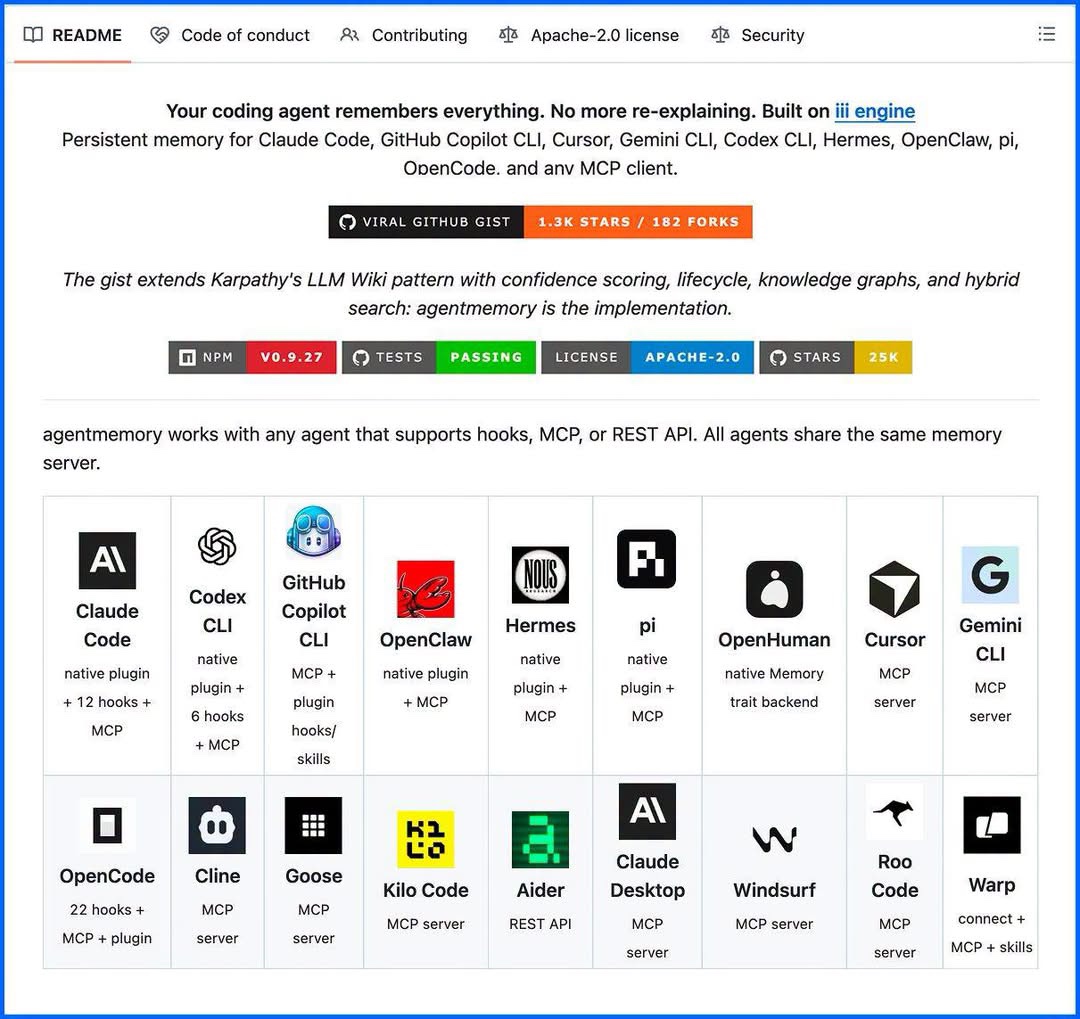
Introduction to Agentmemory
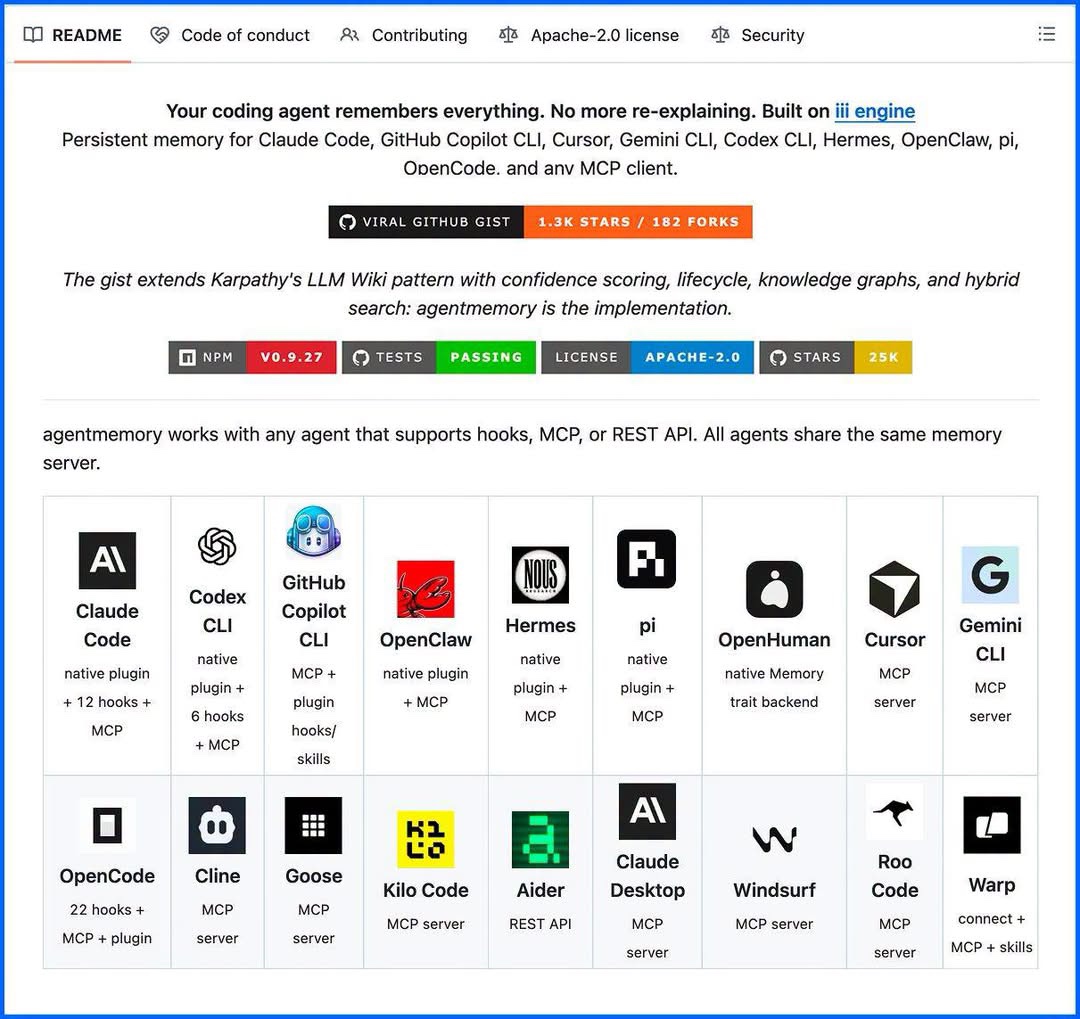
Agentmemory is a revolutionary tool designed to enhance the performance of Claude Code and Codex by providing them with a nearly infinite memory. This innovative solution allows these coding assistants to recall relevant information from previous coding sessions, significantly improving their overall efficiency. The way Agentmemory works is quite straightforward: it records the actions taken by Claude during a coding session, uses AI to compress the information, and then automatically inserts relevant contexts into subsequent coding sessions.
How Agentmemory Saves Context
One of the most notable features of Agentmemory is its ability to save context. In a scenario where 240 pieces of information need to be remembered, a traditional file like CLAUDE.md would require over 22,000 tokens. In stark contrast, Agentmemory achieves the same level of recall using approximately 1,900 tokens, resulting in a remarkable 92% reduction in token usage. This efficiency is crucial for several reasons:
- Reduced Token Usage: By minimizing the number of tokens used, Agentmemory helps in decreasing the computational resources required for coding sessions. This reduction can lead to faster coding times and lower costs associated with computation.
- Increased Productivity: With the ability to recall a vast amount of information from previous sessions, developers can focus more on the creative aspects of coding rather than spending time recalling or re-writing existing code snippets.
- Enhanced 合作: Agentmemory's context-saving feature facilitates smoother collaboration among developers. Since the tool can remember and apply previous coding decisions and fixes, team members can pick up where others 左边 off more easily.
Benefits of Using Agentmemory
The integration of Agentmemory into coding workflows offers several benefits, including:
- Token Reduction: Up to 95% reduction in tokens used per session, significantly lowering the barrier to complex coding tasks.
- Increased Session Capacity: The ability to handle more coding sessions before reaching token limits, enhancing overall productivity.
- Improved Coding Experience: By automating the recall of relevant coding contexts, Agentmemory streamlines the coding process, making it more intuitive and less prone to errors.
Implementation and Usage
To 开始 leveraging the power of Agentmemory, developers can access the tool through its @@N8NLINK0@@. The repository provides detailed instructions on how to set up and integrate Agentmemory with Claude Code and Codex, ensuring a seamless transition to more efficient coding practices.
Key Components to Understand
Most modern AI systems combine several layers: data sources, model architecture, training infrastructure, evaluation methods, and deployment controls. Each layer affects accuracy, latency, cost, and reliability in production.
Readers should also understand the role of prompts, context windows, retrieval systems, monitoring, and human review. These components often decide whether a system is merely impressive in a demo or dependable enough for real workflows.
Limitations and Risks
No technical concept should be presented as magic. The article should explain where the approach can fail, including inaccurate outputs, outdated context, biased data, privacy concerns, unclear evaluation, and operational cost.
These limitations do not make the technology unusable, but they do shape how teams should apply it. Good implementation usually includes validation, logging, security review, and a plan for human oversight when decisions matter.
Practical Takeaways
- Start with the core concept before moving into architecture or implementation.
- Connect each technical detail to a practical use case or decision.
- Call out limitations clearly so readers know how to apply the idea responsibly.
How to Use This Resource Effectively
A useful article about Agentmemory Tool should help readers connect the simple explanation, the technical mechanism, and the practical decision they may need to make next. That means the content should not stop at definitions; it should show why the topic matters, where it fits, and how readers can evaluate it responsibly.
For beginners, the most important value is a clear mental model. They should understand the problem the technology solves, the kind of input it receives, the kind of output it produces, and the reason results can vary from one situation to another.
For technical readers, the article should point toward architecture, data quality, evaluation, and deployment tradeoffs. These details explain why two systems with similar demos can behave very differently in production, especially when the data is specialized or the workflow has strict quality requirements.
For business readers, the practical question is not whether the technology is impressive. The better question is whether it can reduce friction, improve decision quality, support a team process, or create a better user experience without adding unacceptable operational risk.
The strongest next step is to compare a short accessible resource with a deeper technical resource, then write down what each one clarifies. That approach gives readers both confidence and caution, which is usually the 正确的 balance for fast-moving technology topics.
Readers should also look for examples that show both successful and difficult cases. A balanced example set makes the article more useful because it reveals the boundary between a clean demonstration and a real operating environment.
Finally, every recommendation should connect back to a practical decision. If the article cannot help someone choose what to learn, test, adopt, avoid, or monitor next, it probably needs more context before publication.
Readers should use the linked source to compare the summary against the original implementation details, especially when architecture, tooling, or deployment steps influence the final decision.
- Define the core concept in plain language.
- Identify the main technical components.
- Map the idea to real workflows.
- Check limitations before recommending adoption.
- Use references to verify important claims.
References
These external sources were used to verify the article and provide deeper context.
Source Images
Conclusion
Agentmemory Tool represents a significant leap forward in coding assistant technology, offering a nearly infinite memory that can drastically reduce token usage and enhance coding efficiency. By understanding how Agentmemory saves context and the benefits it provides, developers can harness its power to improve their coding experience, reduce costs, and increase productivity. As the coding landscape continues to evolve, tools like Agentmemory will play a crucial role in shaping the future of software development.