
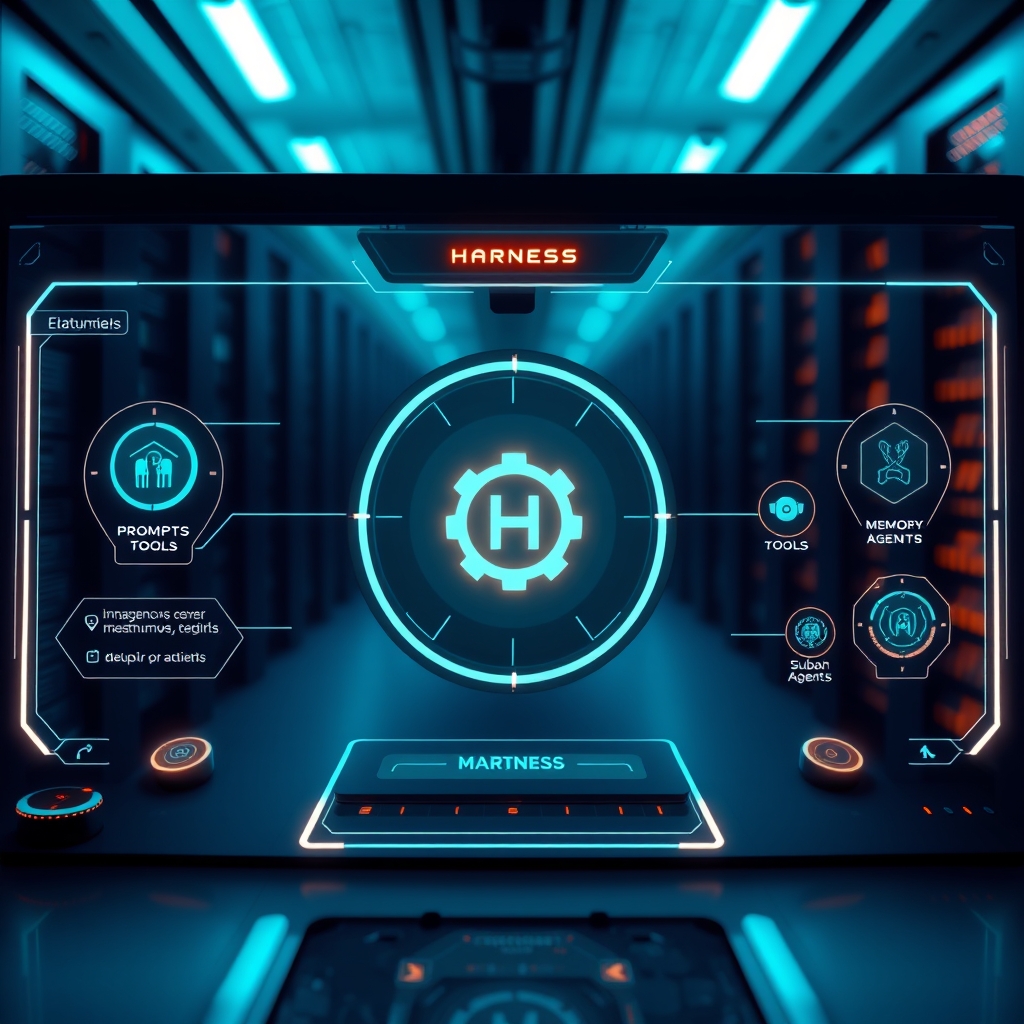
Harness² AI framework enables AI agents to adjust the surrounding system-called a Harness-without human intervention. The Harness wraps an underlying model with elements such as a system prompt, toolset, memory store, skill modules, sub-agents, and a set of control rules. Google Research announced the framework last month, emphasizing that each agent can tailor its Harness to the specifics of a given task.
Harness² AI framework overview
The framework replaces manual tuning with a three-stage loop. First, the Propose stage suggests modifications to any Harness component. Next, the Probe stage runs multiple versions of the agent on the same task to gather comparative data. Finally, the Compose stage merges the most effective changes into a new Harness configuration. Notably, the underlying AI model does not require retraining, and the system records lessons from earlier tasks to inform future optimizations.
A single optimization cycle was reported to lift benchmark scores by 11.8 percentage points, demonstrating a measurable gain from self-adjustment alone. This result highlights a strategic shift: instead of solely pursuing larger language models, developers can boost agent efficiency by continuously refining the operational framework that governs them.
Phần kết luận
The Harness² AI framework shows that AI agents can become more capable by iteratively improving the very infrastructure they run on. By automating Harness adjustments, the approach delivers significant performance jumps-up to 11.8 % on benchmark tests-while keeping the core model unchanged.
Tài liệu tham khảo