
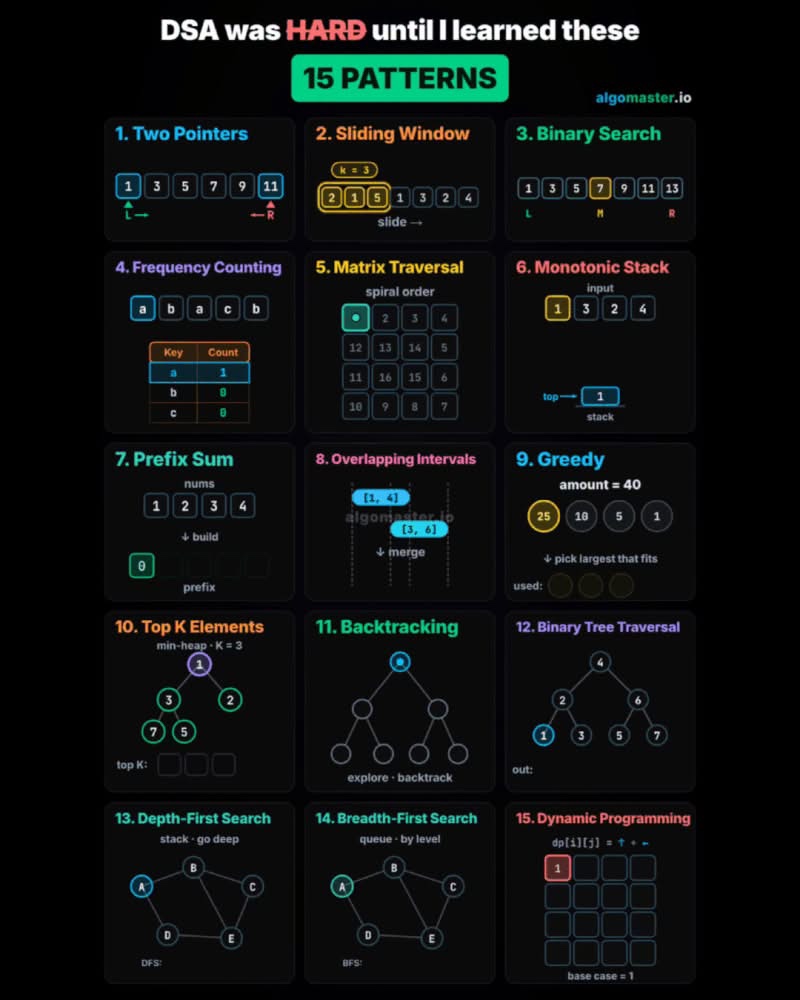
Learning Data Structures and Algorithms (DSA) can be a daunting task, especially for beginners. With numerous problems to practice, it's easy to get overwhelmed and lose sight of the bigger picture. However, by recognizing common DSA problem patterns, learners can simplify their approach and focus on developing a deeper understanding of the underlying concepts. In this article, we'll explore 15 common DSA problem patterns that can help learners improve their problem-solving skills.
Introduction to DSA Problem Patterns
DSA problem patterns are reusable solutions to common problems that appear in various guises. By recognizing these patterns, learners can quickly identify the type of problem they're dealing with and apply the appropriate solution. This approach not only saves time but also helps learners develop a more systematic and efficient way of solving problems.
Common DSA Problem Patterns
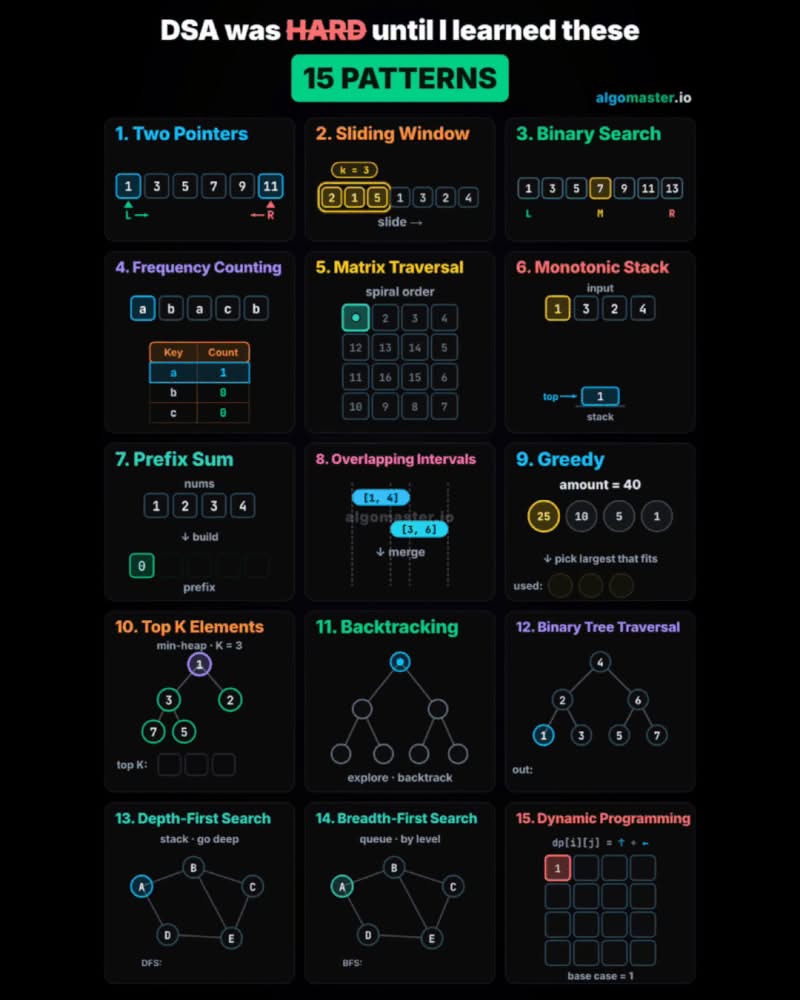
The following are 15 common DSA problem patterns that learners should be familiar with:
- Hai con trỏ: một kỹ thuật dùng để giải các bài toán liên quan đến mảng hoặc danh sách liên kết
- Cửa sổ trượt: một kỹ thuật dùng để giải các bài toán liên quan đến mảng hoặc chuỗi
- Tìm kiếm nhị phân: một kỹ thuật được sử dụng để tìm một phần tử trong một mảng được sắp xếp
- Đếm tần số: một kỹ thuật dùng để đếm tần số của các phần tử trong một mảng
- Traversal ma trận: một kỹ thuật được sử dụng để duyệt ma trận
- Ngăn xếp đơn điệu: một kỹ thuật được sử dụng để giải quyết các vấn đề liên quan đến ngăn xếp
- Tiền tố Sum: một kỹ thuật dùng để tính tổng các phần tử trong một mảng
- Khoảng chồng chéo: một kỹ thuật được sử dụng để giải quyết các vấn đề liên quan đến khoảng thời gian
- Tham lam: một kỹ thuật được sử dụng để giải quyết các vấn đề liên quan đến tối ưu hóa
- Phần tử K hàng đầu: một kỹ thuật được sử dụng để tìm phần tử k hàng đầu trong một mảng
- Quay lui: một kỹ thuật được sử dụng để giải quyết các vấn đề liên quan đến đệ quy
- Truyền tải cây nhị phân: một kỹ thuật được sử dụng để duyệt cây nhị phân
- Tìm kiếm theo chiều sâu: một kỹ thuật được sử dụng để duyệt qua đồ thị hoặc cây
- Tìm kiếm theo chiều rộng: một kỹ thuật được sử dụng để duyệt qua đồ thị hoặc cây
- Lập trình động: một kỹ thuật được sử dụng để giải quyết các vấn đề liên quan đến tối ưu hóa
Practical Takeaways
By recognizing these common DSA problem patterns, learners can:
- Cải thiện kỹ năng giải quyết vấn đề của họ
- Phát triển một cách giải quyết vấn đề có hệ thống và hiệu quả hơn
- Save time by quickly identifying the type of problem they're dealing with
- Tập trung vào việc phát triển sự hiểu biết sâu sắc hơn về các khái niệm cơ bản
How DSA Problem Patterns Works
DSA Problem Patterns becomes clearer when readers can connect the high-level idea to the underlying workflow. A strong explanation should show the path from input data to useful output, including how information is represented, processed, and evaluated.
For technical readers, the most useful details are the steps that influence quality: data preparation, model architecture, training signals, inference behavior, and feedback loops. Explaining those steps gives the article more depth without forcing beginners into unnecessary jargon.
Key Components to Understand
Most modern AI systems combine several layers: data sources, model architecture, training infrastructure, evaluation methods, and deployment controls. Each layer affects accuracy, latency, cost, and reliability in production.
Readers should also understand the role of prompts, context windows, retrieval systems, monitoring, and human review. These components often decide whether a system is merely impressive in a demo or dependable enough for real workflows.
Limitations and Risks
No technical concept should be presented as magic. The article should explain where the approach can fail, including inaccurate outputs, outdated context, biased data, privacy concerns, unclear evaluation, and operational cost.
These limitations do not make the technology unusable, but they do shape how teams should apply it. Good implementation usually includes validation, logging, security review, and a plan for human oversight when decisions matter.
Implementation Considerations
When teams apply DSA Problem Patterns, they need more than a conceptual overview. They should decide what data is allowed, how outputs will be reviewed, what performance metrics matter, and where the technology fits inside an existing workflow.
A practical implementation also needs clear ownership. Product teams define the user problem, engineers manage reliability and integration, security teams review data exposure, and business stakeholders decide what level of automation is acceptable.
How to Use This Resource Effectively
A useful article about DSA Problem Patterns should help readers connect the simple explanation, the technical mechanism, and the practical decision they may need to make next. That means the content should not stop at definitions; it should show why the topic matters, where it fits, and how readers can evaluate it responsibly.
For beginners, the most important value is a clear mental model. They should understand the problem the technology solves, the kind of input it receives, the kind of output it produces, and the reason results can vary from one situation to another.
For technical readers, the article should point toward architecture, data quality, evaluation, and deployment tradeoffs. These details explain why two systems with similar demos can behave very differently in production, especially when the data is specialized or the workflow has strict quality requirements.
For business readers, the practical question is not whether the technology is impressive. The better question is whether it can reduce friction, improve decision quality, support a team process, or create a better user experience without adding unacceptable operational risk.
The strongest next step is to compare a short accessible resource with a deeper technical resource, then write down what each one clarifies. That approach gives readers both confidence and caution, which is usually the Phải balance for fast-moving technology topics.
Readers should also look for examples that show both successful and difficult cases. A balanced example set makes the article more useful because it reveals the boundary between a clean demonstration and a real operating environment.
Cuối cùng, mọi khuyến nghị nên kết nối trở lại với một quyết định thực tế. Nếu bài viết không thể giúp ai đó lựa chọn những gì cần tìm hiểu, kiểm tra, áp dụng, tránh hoặc theo dõi tiếp theo, thì có lẽ bài viết đó cần thêm ngữ cảnh trước khi xuất bản.
Người đọc nên sử dụng nguồn được liên kết để so sánh bản tóm tắt với chi tiết triển khai ban đầu, đặc biệt khi các bước kiến trúc, công cụ hoặc triển khai ảnh hưởng đến quyết định cuối cùng.
- Xác định khái niệm cốt lõi bằng ngôn ngữ đơn giản.
- Xác định các thành phần kỹ thuật chính.
- Ánh xạ ý tưởng tới quy trình làm việc thực tế.
- Kiểm tra các giới hạn trước khi đề xuất áp dụng.
- Sử dụng tài liệu tham khảo để xác minh các tuyên bố quan trọng.
References
Những nguồn bên ngoài này đã được sử dụng để xác minh bài viết và cung cấp bối cảnh sâu hơn.
- Nguồn: AlgomasterGiới thiệu hai con trỏ - AlgomasterMở tài nguyên gốc
- Nguồn: AlgomasterGiới thiệu về cửa sổ trượt - AlgomasterMở tài nguyên gốc
- Nguồn: AlgomasterGiới thiệu về tìm kiếm nhị phân - AlgomasterMở tài nguyên gốc
- Nguồn: AlgomasterGiới thiệu về tính tần suất - AlgomasterMở tài nguyên gốc
- Nguồn: AlgomasterGiới thiệu về truyền tải ma trận - AlgomasterMở tài nguyên gốc
- Nguồn: AlgomasterGiới thiệu ngăn xếp đơn điệu - AlgomasterMở tài nguyên gốc
- Nguồn: AlgomasterGiới thiệu tổng tiền tố - AlgomasterMở tài nguyên gốc
- Nguồn: AlgomasterGiới thiệu khoảng thời gian - AlgomasterMở tài nguyên gốc
- Nguồn: Algomastergiới thiệu tham lam - AlgomasterMở tài nguyên gốc
- Nguồn: AlgomasterGiới thiệu về các phần tử k hàng đầu - AlgomasterMở tài nguyên gốc
- Nguồn: AlgomasterGiới thiệu về quay lui - AlgomasterMở tài nguyên gốc
- Nguồn: AlgomasterGiới thiệu về cây nhị phân - AlgomasterMở tài nguyên gốc
- Nguồn: AlgomasterGiới thiệu về dfs - AlgomasterMở tài nguyên gốc
- Nguồn: AlgomasterGiới thiệu về bfs - AlgomasterMở tài nguyên gốc
- Nguồn: Blog Algomaster20 mẫu để thành thạo lập trình động - Blog AlgomasterMở tài nguyên gốc
Source Images
Conclusion
Các mẫu vấn đề DSA là một công cụ mạnh mẽ dành cho những người học muốn cải thiện kỹ năng giải quyết vấn đề của mình. Bằng cách nhận ra các mô hình chung và áp dụng các giải pháp thích hợp, người học có thể đơn giản hóa cách tiếp cận của mình và phát triển cách giải quyết vấn đề có hệ thống và hiệu quả hơn. Với sự thực hành và cống hiến, người học có thể nắm vững các mẫu này và trở nên thành thạo về DSA.