Anthropic has unveiled a 10-page PDF guide that walks developers through building an Anthropic Skill Library, a modular collection of Skills that lets an AI agent recognize and pick the right workflow without constant prompting.
Anthropic Skill Library Overview
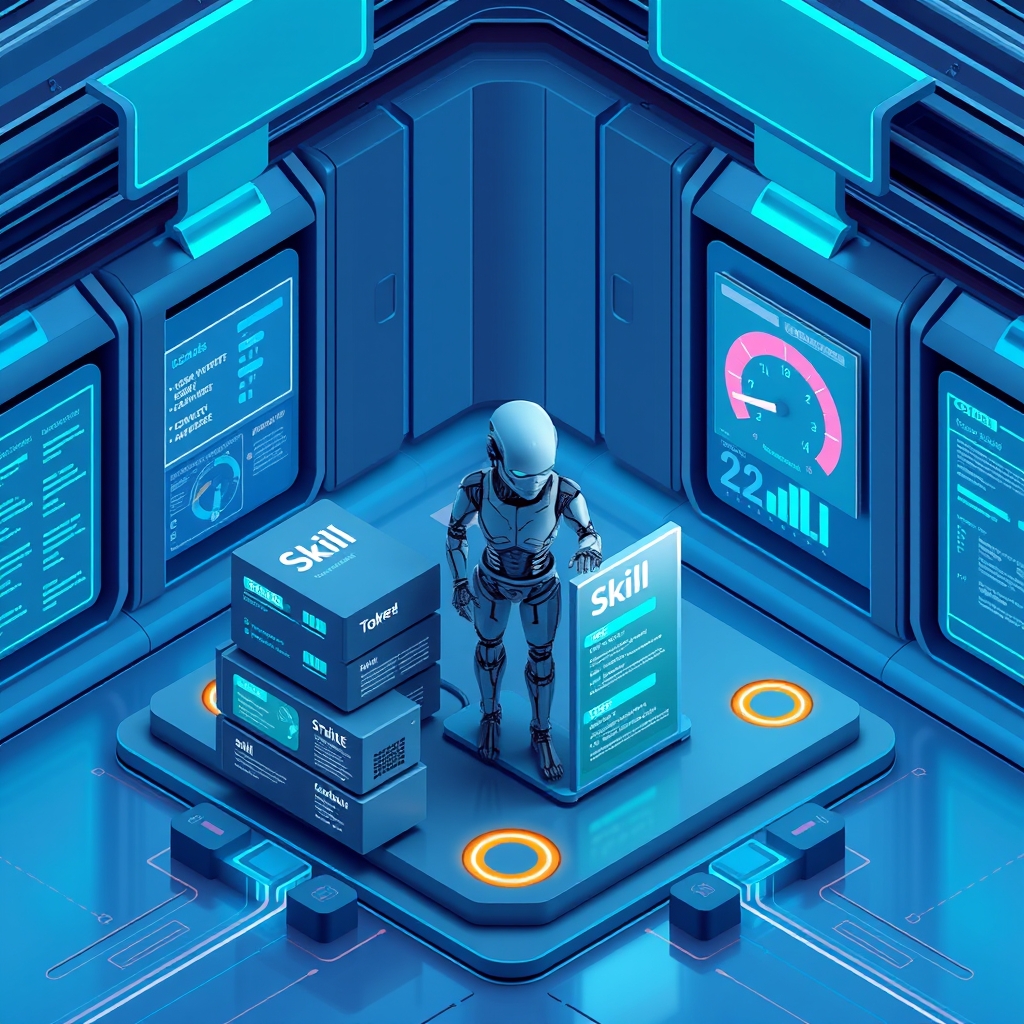
The guide proposes an eight-layer architecture that separates knowledge, triggers, procedures, resources, scripts, checks, safety guards, and learning mechanisms. By storing only a brief ~100-token description for each Skill and loading detailed content on demand, the system keeps token consumption low while preserving full procedural detail.
Layer 1 – Library
Core facts are kept in a central `CLAUDE.md` file, while each workflow is encapsulated in its own Skill file. This clear division prevents the AI from being overwhelmed by a monolithic instruction set.
Layer 2 – Trigger
The Skill description acts as the interface the agent uses to decide when the Skill is applicable. Every Skill must define its inputs, expected outputs, three concrete activation phrases, and one scenario where it should not be used.
Layer 3 – Procedure
Procedures are broken into numbered steps that always start with a "Look" verification step and finish with a "Check" confirmation step, ensuring a consistent execution pattern.
Layer 4 – Resources
Long-form reference material is stored in a `references/` folder, allowing the agent to fetch high-quality documents only when needed.
Layer 5 – Scripts
Tasks that have a single correct answer-such as calculations, data transformations, or result validation-are delegated to executable code rather than left to the model's internal reasoning.
Layer 6 – Checks
Each Skill includes five yes/no criteria. The agent may not declare the task complete until every criterion is marked as satisfied.
Layer 7 – Guard
Actions are classified into three groups: those the agent may perform autonomously, those that require explicit user confirmation, and those that are strictly prohibited. Importantly, any text taken from external sources is treated as input data, not as a command the AI must obey.
Layer 8 – Learn
Whenever a user corrects the agent or provides feedback, the lesson is turned into a permanent check line within the Skill, preventing the same mistake from recurring.
Token Efficiency
The authors report that with 25 distinct processes the architecture consumes roughly 3,900 tokens per request, compared with the 36,000 tokens that would be needed if the entire instruction set were loaded at once.
Autonomous Workflow Selection
Because the trigger layer supplies clear activation cues, the AI agent can autonomously select the appropriate Skill without the user having to specify each step, turning the model from a simple prompt-answering tool into a workflow-aware assistant.
Phần kết luận
The Anthropic Skill Library approach offers a practical path to convert large language models into disciplined assistants that follow verified procedures, respect safety guards, and continuously improve through user feedback.
Tài liệu tham khảo Anthropic Skill Library PDF